
Finding a school for your Asian child in Warsaw 2026 is one of the most stressful decisions you will make as an Indian, Bangladeshi, or Sri Lankan parent in Poland. The Polish school system is free for foreigners, but enrollment paperwork, language gaps, and cultural adjustment make the process feel overwhelming. Add Karta Pobytu (Polish residence permit) timing, school district rules, and the choice between Polish public schools, private bilingual schools, and full English-medium international schools, and you have a decision that affects your child's next decade. This guide breaks down every realistic option for South Asian families in Warsaw — what each school type costs, how to enroll step by step, what documents the Polish education ministry requires, and how to choose based on your child's age, English level, and your long-term plan to stay in Poland.
Public school enrollment for foreigner children in Warsaw
Public schools in Warsaw are free for every child living in Poland legally, including children of foreign workers on Karta Pobytu or work visas. Polish law guarantees school access to all minors regardless of immigration status, confirmed by the Ministry of Education. For Indian, Bangladeshi, and Sri Lankan families, public school is the cheapest and fastest path — your child also learns Polish quickly, which matters if you plan to stay long-term.
Public school in Poland starts at age 7 (klasa 1), with a mandatory zero year (zerówka) at 6. Enrollment runs district-by-district through the Warsaw e-rekrutacja system. Children of foreigners have additional Polish language support — free 2-4 extra Polish lessons per week paid by the city.
- Cost: free, including textbooks for grades 1-8
- Language of instruction: Polish only (with extra free Polish lessons for foreigners)
- Application window: March-April for September start
- Best for: families staying in Poland 5+ years, children under 10
- Required documents: Karta Pobytu or visa, PESEL, proof of Warsaw address (zameldowanie or rental contract), birth certificate with sworn translation
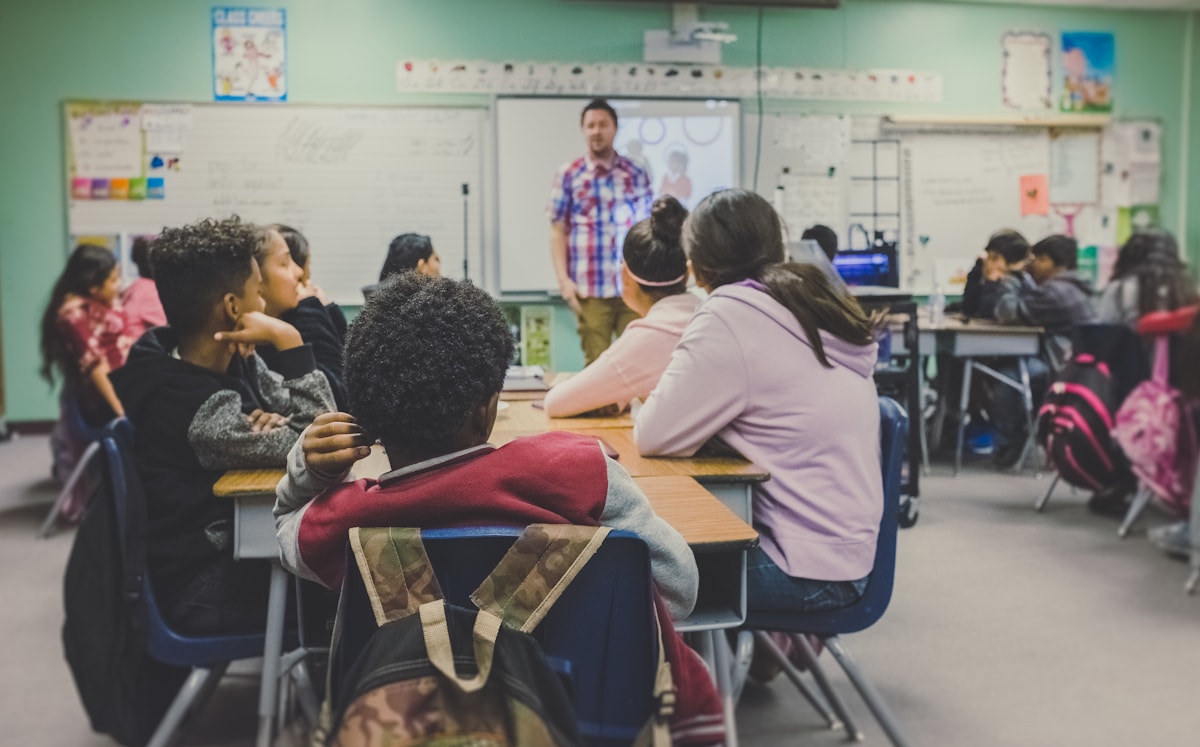
International schools in Warsaw for Indian and Bangladeshi families
International schools teach fully in English (some also in French or German) and follow IB, British, or American curricula. They are the obvious choice if your child is over 10, speaks no Polish, or if you are likely to move to another country within 3 years. The trade-off is cost: Warsaw international schools charge between 30,000 and 80,000 PLN per year, plus enrollment fees of 3,000-8,000 PLN.
Main English-language international schools in Warsaw 2026:
- American School of Warsaw (ASW) — IB curriculum, around 75,000-85,000 PLN/year, established expat community
- British School Warsaw — British curriculum + IGCSE, around 60,000-75,000 PLN/year
- Akademeia High School — Polish elite school with English programs, around 55,000 PLN/year
- Thames British School — British curriculum, around 40,000-55,000 PLN/year, three Warsaw campuses
- International European School Warsaw (IES) — Cambridge curriculum, around 30,000-42,000 PLN/year
Many Indian IT professionals on Blue Card use Thames or IES because the cost roughly matches what they paid in Bangalore or Mumbai for private English-medium schools. Some employers (especially big tech and consulting firms relocating you to Poland) cover 50-100% of international school fees — always ask HR before signing the offer.
Polish bilingual and private schools — the middle path
Between free public schools and expensive international schools sits a third category: Polish private bilingual schools. These teach mainly in Polish with 30-50% of subjects in English. Annual cost is 12,000-25,000 PLN — affordable on most Indian or Bangladeshi salaries in Poland. They suit families who want their child to integrate into Poland (so eventual permanent residence and Polish citizenship work smoothly) but also keep strong English. Read more about how schooling decisions intersect with your long-term residence plan in our Karta Pobytu for Indian Spouse and Family 2026 guide.
Examples that South Asian families in Warsaw frequently choose:
- Społeczne Liceum nr 1 (Bednarska) — strong academics, bilingual, 18,000-22,000 PLN/year
- International School of Warsaw IPS — bilingual primary, around 20,000 PLN/year
- Szkoła Montessori Warsaw — Montessori method with English, 15,000-25,000 PLN/year
- Open Future International School — IB Primary, 25,000-35,000 PLN/year

Practical tip: Before signing any school contract, visit at least three schools in person, ask to see classrooms during lessons, and request to speak with at least one parent whose child is Indian, Bangladeshi, or Sri Lankan. Schools are happy to connect you — and the parents will give you honest answers about how your child will be treated.
Documents you need to enroll a foreign child in any Warsaw school
The document checklist is roughly the same across public, private, and international schools, with international schools adding their own academic forms. The Polish migration office confirms that lawful residence is required only at the parent level — the child themselves can enroll even before their Karta Pobytu card is printed, as long as you can prove the application is pending.
- Child's birth certificate, apostilled and translated by a sworn translator (tłumacz przysięgły) — budget 200-400 PLN per page
- Child's passport copy and Karta Pobytu (or visa, or pending application stamp)
- PESEL number for the child — apply at your local urząd dzielnicy after arrival
- Previous school records (last 2 years), apostilled, translated into Polish
- Vaccination record — Polish family doctor will review and add any missing shots
- Proof of Warsaw address (rental contract or zameldowanie certificate)
- Parent's Karta Pobytu or employment contract proving legal stay
Cost comparison and a realistic monthly budget for Asian families
Here is the realistic 2026 monthly cost per child by school type, including hidden expenses Indian and Bangladeshi parents often forget:
- Public Polish school: 0 PLN tuition; budget 200-400 PLN/month for school trips, materials, after-school care, and lunches
- Polish private bilingual: 1,200-2,500 PLN/month tuition + 300-500 PLN extras
- Mid-tier international (Thames, IES): 3,500-5,500 PLN/month + 500-800 PLN for buses, lunch, uniforms
- Premium international (ASW, British School): 6,500-8,500 PLN/month + 1,000-1,500 PLN extras
For families sending money home regularly, this is a significant budget item. If school fees stretch your finances, our guide on Sending Money Home to India from Poland 2026 shows how to reduce transfer fees by 60-80%, which can fund several months of bilingual school. Many Sri Lankan and Bangladeshi families we work with switch to Wise or Revolut precisely to free up budget for private education.
How to choose: a decision framework for South Asian parents
Use these four questions to narrow down your choice quickly:
- How long will you stay in Poland? Under 3 years → international. 3-7 years → bilingual private. Indefinite/permanent residence path → public Polish school
- How old is your child? Under 8 → any option works; kids absorb Polish in 6-12 months. 9-13 → bilingual or international. 14+ → almost always international, public Polish school is too hard mid-stream
- What is your monthly net household income? Under 12,000 PLN → public. 12,000-25,000 PLN → bilingual private. Above 25,000 PLN or employer-sponsored → international
- Do you plan to return to India/Bangladesh/Sri Lanka? If yes, choose IB or Cambridge-curriculum international school for diploma portability
Choosing the right school is part of building a stable life for your family in Poland. Legal Solutions — 98% approval rate.