
For Indian citizens working in Poland or planning the move from Mumbai, Bengaluru or Delhi, securing a Karta Pobytu (Polish residence permit) is the single most important legal step you will take in your first year. This 2026 complete guide for India citizens explains how to apply for Karta Pobytu in Poland, which documents must be apostilled in India, the realistic processing times in each voivode office, and the actual money you need to budget. Indians make up the largest group of non-EU clients we serve at Legal Solutions — roughly one in three of our 3,000+ cases — so we have turned that case data into clear, action-oriented steps. Whether you arrived on a national D visa, transferred from another EU country on an intra-corporate scheme, or you are still in India mapping out your move, this guide will walk you from MOS online registration to fingerprint appointment and the moment you finally collect your plastic card.
Eligibility and pathways: which Karta Pobytu fits Indian workers?
TL;DR: Most Indian nationals in Poland qualify for the work-based temporary residence permit (TRC) under Article 114 of the Foreigners Act. Pick the path that matches your actual contract, not the one a recruiter or agent suggests.
For Indian citizens, the most common Karta Pobytu types in 2026 are:
- Work-based TRC (Article 114) — for standard employment contracts with a Polish employer.
- EU Blue Card — for high-skilled IT engineers and specialists earning above the 2026 threshold of around PLN 12,510 gross per month.
- Family reunification — for spouses and minor children of an existing permit holder.
- Student TRC — for full-time degree programmes at Polish universities.
- Long-term EU resident or PMŻ later on — once you accumulate 5 years of legal stay.
Key eligibility checks before you file:
- Valid Indian passport with at least 18 months remaining.
- Legal entry into Poland (national D visa, Schengen visa, or another residence document).
- Stable, declared income through a Polish employer or registered business.
- Health insurance covering all of Schengen — usually NFZ via your employer.
- Confirmed accommodation in Poland (registered lease or hotel proof).
According to the Polish migration authority gov.pl/web/cudzoziemcy, every non-EU national planning to stay longer than three months must hold a TRC or another long-stay status.
If you already hold a TRC and only need to extend it, follow our step-by-step extension guide for work permit and Karta Pobytu. Renewals account for over half of Indian client cases — the rules differ from a first application.

Document checklist for Indian applicants: from PCC to apostille
TL;DR: Indian applicants face stricter document scrutiny than EU citizens — voivodes verify originals, sworn translations and apostilles very carefully. Missing one paper can push your file back by months.
For Indian citizens applying for Karta Pobytu in 2026, prepare the following originals and certified copies:
- Indian passport (original plus copies of every stamped page).
- Four biometric photos (35×45 mm, white background, taken within the last six months).
- Indian birth certificate — apostilled by the Ministry of External Affairs in Delhi, then sworn-translated into Polish.
- Police Clearance Certificate (PCC) from your home district police — issued within the last 90 days and apostilled.
- Marriage certificate, if applying as a spouse — apostilled and sworn-translated.
- Polish health insurance proof (NFZ confirmation from ZUS, or a private NN/Warta policy).
- Proof of accommodation: signed lease, landlord's passport copy and ideally a meldunek (registration of stay).
- Employer documents: zaświadczenie o zatrudnieniu, last three payslips, signed contract and work permit.
- Tax identifiers: PESEL number and NIP if you are self-employed.
- Bank statement showing three to six months of income (minimum threshold is roughly PLN 770 per month per person plus PLN 600 housing in 2026).
Sworn translator note: even if your Indian PCC and birth certificate are in English, most voivodes still require a Polish sworn translation. Tłumacz przysięgły rates run PLN 60-150 per page in 2026.
If your Indian degree must be recognised for the underlying work permit, read our dedicated Indian degree recognition in Poland guide before you collect your university documents.

Step-by-step application process: from MOS online to fingerprints
TL;DR: Since 2024 most voivode offices accept (and prefer) the MOS online portal. Indian applicants still need at least one in-person visit for fingerprints, so plan to be physically in Poland for the appointment.
- Register on MOS — the module for foreigners — using a Polish phone OTP and your Polish address.
- Fill the TRC application form in Polish with the help of a sworn translator or immigration lawyer.
- Upload scans of every supporting document (passport, employer letter, PCC, lease, insurance).
- Pay the state fee online: PLN 340 application + PLN 100 card issuance = PLN 440 total.
- Receive a stempel (stamp in your passport) at your first in-person visit, confirming your stay is legal during processing.
- Attend the fingerprint appointment four to twelve weeks later.
- Wait for the substantive decision (60-180 days depending on voivode load).
- Collect your plastic Karta Pobytu card 7-21 days after a positive decision.
The stempel from step 5 is critical for Indian workers — it lets you remain legally in Poland and continue working with the same employer while the file is decided, even if your visa expired the day before.
Voivode-specific rules differ. For Warsaw applicants, file with the Mazowiecki Urząd Wojewódzki — see uw.gov.pl for current opening hours and the dedicated Indian-citizen queue at Marszałkowska 3/5.
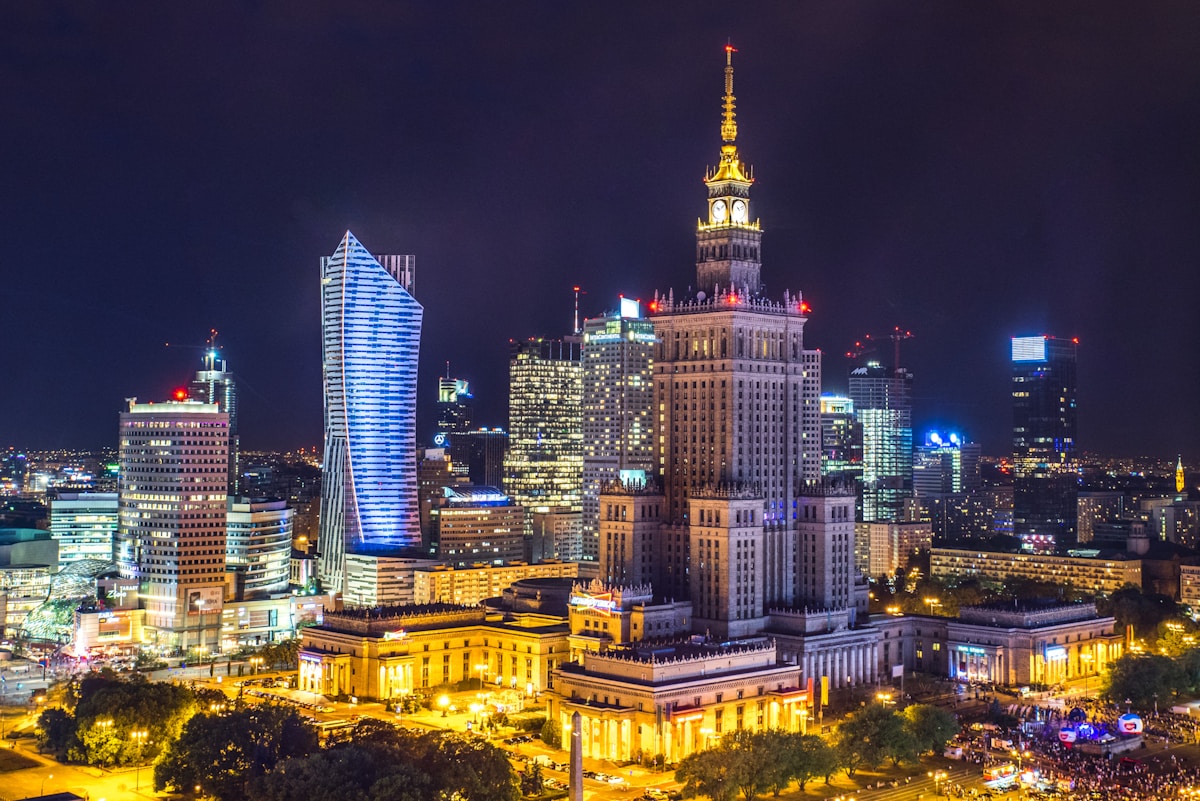
Practical tip: file your Karta Pobytu application at least 30 days before your visa or current permit expires. Filing on time gives you the protective stempel — late filing forces you to leave Poland and re-enter on a fresh visa.
Costs, timelines and voivode-by-voivode realities
TL;DR: Budget around PLN 2,200-3,300 for a single Indian applicant in 2026, including translations, photos, postage and an optional lawyer review.
Real cost breakdown for one applicant in 2026:
- Application fee: PLN 340.
- Card issuance: PLN 100.
- Sworn translations (PCC + birth certificate + lease): PLN 400-700.
- Apostille from MEA Delhi plus international courier: roughly PLN 200.
- Photos and printing: PLN 35-50.
- Optional lawyer review: PLN 800-1,500.
Realistic processing times in 2026 by voivode:
- Warsaw (Mazowiecki UW): 6-9 months.
- Wrocław: 4-7 months.
- Kraków: 5-8 months.
- Gdańsk: 3-6 months.
- Katowice: 4-6 months.
For practical money management while you wait, our banking guide for foreigners in Poland lists Polish accounts that accept the stempel as ID proof — useful when your old card expired but the new one is still being printed.
Common mistakes Indian applicants make (and how to avoid them)
TL;DR: Four out of ten delays we see for Indian clients come from preventable issues with apostilles, salary thresholds or accommodation proof.
- Submitting an Indian PCC older than 90 days at the moment of file submission.
- Missing apostille on Indian-issued documents — a notary stamp from India alone is not accepted by voivodes.
- Using a hotel booking instead of a registered residential lease as accommodation proof.
- Listing a salary that falls below the 2026 minimum threshold for foreigners (PLN 4,806 gross per month).
- Filing at the wrong voivode — your case must go to the office for the city where you are registered, not where you work.
- Forgetting NFZ confirmation when employer enrolment is delayed by more than 30 days.
- Bringing incomplete fingerprint paperwork — always carry a printed copy of your case ID and date confirmation.
If there is any chance you might lose your job during processing, read what to do when your work contract ends in Poland before you sign anything new — a wrong move here can cancel your TRC.
Frequently Asked Questions
Can Indian citizens apply for Karta Pobytu directly from India?
No — you must be physically present in Poland to file a TRC. The application is submitted at the voivode office of your registered Polish address, and biometrics require an in-person visit. From India, you first apply for a national D visa or another long-stay permit, enter Poland, and only then submit the Karta Pobytu file.
How long does Karta Pobytu processing take for Indian applicants in 2026?
Average processing time is four to nine months, depending on voivode. Warsaw is the slowest (often six to nine months); smaller offices like Gdańsk and Katowice can decide in three to five months. Your stempel covers you legally for the entire wait, so day-to-day life and work continue normally.
Do I need to speak Polish to apply for Karta Pobytu?
No, but the application form must be filled in Polish. Most Indian applicants either pay a sworn translator (PLN 200-400 just for the form) or hire an immigration lawyer who handles the entire bilingual file. Voivode officials rarely speak fluent English, so always bring a translator or representative to appointments.
Can I work in Poland while waiting for my Karta Pobytu decision?
Yes, provided you filed the application before your visa or previous TRC expired. The stempel acts as proof of legal residence and the right to work — but only for the same employer listed in the application. Switching jobs during processing requires a formal modification or a brand-new permit application.
What happens if my Karta Pobytu application is refused?
You have 14 days from delivery of the negative decision to appeal to the Office for Foreigners (Szef Urzędu do Spraw Cudzoziemców). Many refusals stem from missing documents and can be reversed on appeal. Once the card is in your hand, the next stability milestone is permanent residency — see our permanent residency in Poland guide for the five-year roadmap.
Karta Pobytu is your gateway to a settled life in Poland — handle it once, handle it right with Legal Solutions — 98% approval rate.